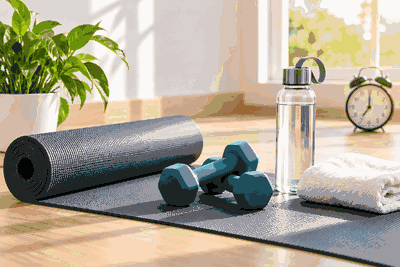
Starting your morning with exercise can be one of the simplest ways to build a healthier lifestyle. You do not need an expensive gym membership, complicated equipment, or an intense training program to begin. A comfortable space at home, a few basic movements, and a willingness to practice regularly are enough to get started. The best morning home workout routine for beginners is one that feels manageable, improves your confidence, and fits naturally into your daily schedule. Instead of chasing dramatic results overnight, you can focus on developing a habit that supports your long-term physical and mental well-being.
Imagine waking up, drinking some water, opening your curtains, and spending a few minutes moving your body before checking your phone. That simple routine can create a positive start to your day. Morning exercise may help you feel more alert, improve your mood, and give you a sense of accomplishment before work or school begins. Whether your goal is to become stronger, improve endurance, support weight management, or simply move more often, a beginner-friendly workout can help you make progress. This guide explains how to prepare, which exercises to choose, how to perform them safely, and how to build a realistic weekly workout schedule.
Introduction to Morning Home Workouts
A morning home workout is a planned exercise session completed at home shortly after waking up. It can include gentle cardio, bodyweight strength training, mobility exercises, and stretching. For beginners, the goal is not to perform as many repetitions as possible or finish every session exhausted. The goal is to teach your body how to move comfortably while gradually improving strength, coordination, and cardiovascular fitness. A balanced workout should challenge you enough to encourage improvement without making the experience overwhelming.
Home workouts are particularly convenient because they remove several common barriers to exercise. You do not have to travel to a fitness center, wait for equipment, or adjust your schedule around a gym's opening hours. You can exercise in your bedroom, living room, or another safe area with enough space to move freely. According to the Centers for Disease Control and Prevention, adults should generally aim for at least 150 minutes of moderate-intensity aerobic activity each week, along with muscle-strengthening activities on two or more days. However, beginners do not have to reach that target immediately. Starting with shorter sessions and gradually increasing activity is a practical approach to developing fitness.
Benefits of Exercising in the Morning
Morning workouts offer several practical advantages, especially for people who struggle to find exercise time later in the day. Completing your workout early can reduce scheduling conflicts caused by meetings, household responsibilities, or unexpected commitments. Regular physical activity also supports cardiovascular health, muscular fitness, mental well-being, and everyday physical function. These benefits come from exercising consistently rather than from a particular time of day, so morning workouts are not automatically better than afternoon or evening sessions. Their greatest advantage may simply be that they fit your lifestyle and make regular movement easier to maintain.
Another benefit of a home-based morning routine is flexibility. Some mornings you may have enough time for a complete 20-minute session, while other mornings you may only manage ten minutes. Both can contribute to an active lifestyle. You can adjust exercise intensity, repetitions, and rest periods according to your energy and experience. Instead of comparing yourself with advanced fitness enthusiasts, concentrate on your own progress. Small improvements in movement quality, stamina, and consistency are meaningful achievements that can motivate you to continue.
Better Energy, Mood, and Focus
Exercise increases the demands placed on your heart, lungs, and muscles, encouraging your body to respond to physical activity. A gentle morning workout can help you transition from sleep into a more active state. Some people notice that movement makes them feel more awake and ready to concentrate on daily tasks. Regular physical activity is also associated with improved mental health and sleep quality, although individual responses differ. You do not need an exhausting workout to experience the satisfaction of starting your day with purposeful movement.
Think of your morning routine as a way to establish momentum. Completing a few squats, walking in place, and stretching can create a small but meaningful accomplishment. That sense of progress may encourage other healthy decisions, such as eating a balanced breakfast or taking movement breaks during work. Morning exercise should not become another source of pressure, however. If you sleep poorly or feel unusually tired, reducing the intensity may be more appropriate than forcing yourself through a demanding session. Sustainable fitness depends on balancing activity with adequate recovery.
Building Strength and Supporting Weight Management
Bodyweight exercises are useful for developing basic muscular strength because they allow you to work against your own body weight. Squats strengthen important lower-body muscles, wall push-ups train the upper body, and glute bridges target the hips and buttocks. These movements also help beginners practice coordination and controlled movement patterns. As your muscles become stronger, everyday activities such as climbing stairs, carrying groceries, and standing up from a chair may feel easier. The key is to use appropriate exercise variations and increase the challenge gradually as your ability improves.
Morning workouts can also contribute to weight management by increasing physical activity and supporting overall energy expenditure. However, exercise alone does not guarantee weight loss, and the time of day does not determine how much body fat you lose. Nutrition, sleep, overall activity, and individual health factors also influence results. A balanced approach combines regular exercise with nutritious meals and realistic expectations. Rather than judging progress only by the number on a scale, consider improvements in strength, endurance, energy, and daily movement. These changes can provide valuable signs that your routine is working.
How to Prepare for Your Morning Workout
Preparation can make the difference between a workout that feels comfortable and one that feels unnecessarily difficult. Before starting, decide when you will exercise, what movements you will perform, and how much time you can realistically dedicate to the session. Beginners often benefit from preparing their workout clothes and clearing a suitable exercise area the night before. This reduces the number of decisions required in the morning and makes it easier to begin. You do not need a complicated fitness setup, but a little planning helps you stay organized and avoid rushing through important steps.
Pay attention to how your body feels when you wake up. Some stiffness is common after sleeping, and gentle movement may help you feel more comfortable. Begin with easy movements rather than jumping directly into demanding exercises. If you have a chronic medical condition, a recent injury, significant balance problems, or symptoms that could make exercise unsafe, ask a qualified healthcare professional about appropriate activities. Stop exercising if you experience chest pain, faintness, severe breathlessness, or other concerning symptoms, and seek appropriate medical attention. Safety should always take priority over completing a workout.
Creating a Safe Workout Space
You can create a useful workout area without purchasing expensive equipment. Choose a flat, stable surface that provides enough room to extend your arms and legs comfortably. Remove loose rugs, cables, furniture, and other objects that might cause you to trip. If you plan to perform floor exercises, a non-slip exercise mat or another suitable padded surface can make the movements more comfortable. Wear clothing that allows unrestricted movement and footwear appropriate for the surface and exercises. Keep drinking water nearby so that you can take breaks whenever necessary.
A stable chair or wall can be especially helpful for beginners who need additional support. For example, a chair can assist with balance during modified squats, while a wall provides resistance for beginner push-ups. Make sure the chair does not have wheels and cannot slide unexpectedly. Good lighting and ventilation also contribute to a comfortable environment. You may enjoy playing music, but keep the volume low enough to remain aware of your surroundings. The ideal workout space is not necessarily large or attractive; it simply needs to allow safe, controlled movement without distractions.
Hydration, Breakfast, and Warm-Up
Hydration is an important part of preparing for physical activity. After waking up, drink water according to your thirst and comfort, especially if you have not had anything to drink for several hours. You do not need to consume an excessive amount of water before a short workout. Whether to eat breakfast before exercising depends on personal preference, exercise intensity, and individual health needs. Some people feel comfortable doing gentle exercise before breakfast, while others prefer a small snack such as a banana or yogurt. If you have diabetes or another condition affected by food timing, follow advice from your healthcare professional.
A warm-up prepares your body for the movements that follow. The American Heart Association recommends approximately five to ten minutes of gradual warm-up activity before exercise. You can begin by walking slowly in place, rolling your shoulders gently, and performing controlled arm and leg movements. As your body becomes more comfortable, increase your movement speed slightly. Avoid forcing stiff joints into uncomfortable positions or performing aggressive stretches immediately after waking. A warm-up should make you feel progressively more prepared, not tired before the main workout begins.
Best 20-Minute Morning Workout Routine
This beginner-friendly workout combines gentle cardiovascular activity with simple strength and stability exercises. It requires no specialized equipment and can be adjusted for different fitness levels. The session includes a five-minute warm-up, approximately ten minutes of main exercises, and a five-minute cool-down. For the main workout, perform each movement for about 40 seconds, followed by 20 seconds of rest, and complete two rounds of five exercises. The sixth movement described below is an optional alternative that you can rotate into the routine on different days. Beginners who find this schedule difficult can shorten the exercise intervals or complete only one round.
Move at a pace that allows you to maintain control and breathe comfortably. During moderate-intensity activity, you should generally be able to talk even though your breathing becomes faster. You do not need to perform every movement perfectly on your first attempt. Focus on learning proper technique and choosing a range of motion that feels manageable. If a particular exercise causes pain, stop and choose an easier variation or another suitable movement. The purpose of this routine is to create a positive foundation for future fitness, not to push your body beyond its current abilities.
| Workout Stage | Activity | Duration |
|---|---|---|
| Warm-Up | Walking and Mobility | 5 Minutes |
| Main Workout | Five Exercises, Two Rounds | 10 Minutes |
| Cool-Down | Slow Walking and Stretching | 5 Minutes |
| Total | Complete Beginner Workout | 20 Minutes |
Five-Minute Dynamic Warm-Up
Begin your morning workout with five minutes of gentle movement. Spend the first minute walking slowly in place while allowing your arms to swing naturally. During the second minute, gradually increase your walking pace without turning the movement into a run. For the third minute, perform controlled shoulder rolls and comfortable arm circles to encourage upper-body mobility. During the fourth minute, alternate gentle heel raises and side steps. Finish with another minute of comfortable marching, gradually preparing your body for the exercises ahead.
Dynamic warm-up movements are particularly useful because they involve moving your joints through comfortable ranges of motion. Unlike holding a deep stretch for an extended period, these movements allow you to warm up while remaining active. Keep your shoulders relaxed and avoid locking your knees. If you have balance concerns, perform standing movements near a stable support. The warm-up should feel easy enough that you can maintain a normal conversation. By the end, you may notice that your breathing is slightly faster and your muscles feel more prepared for activity.
Bodyweight Squats
Bodyweight squats are among the most useful exercises for developing lower-body strength. They primarily work the quadriceps, glutes, and other muscles involved in standing and sitting. To begin, stand with your feet approximately shoulder-width apart and your toes pointing slightly outward if comfortable. Slowly bend your hips and knees as though you are preparing to sit on a chair. Keep your weight distributed comfortably through your feet and lower yourself only as far as you can maintain control. Push through your feet to return to standing while breathing naturally.
Beginners can start with five to ten controlled repetitions rather than trying to squat deeply. If maintaining balance is difficult, position a stable chair behind you and practice sitting down and standing up slowly. This variation helps develop strength while providing a clear movement target. Avoid allowing your knees to collapse inward, and do not force your back into an uncomfortable position. You should feel muscular effort in your legs and hips rather than sharp pain in your joints. As your strength improves, you can gradually increase repetitions or use a slightly deeper range of motion.
Wall Push-Ups
Wall push-ups provide an accessible introduction to upper-body strength training. They work the chest, shoulders, and arms while placing less demand on the body than traditional floor push-ups. Stand facing a sturdy wall at approximately arm's length and place your palms against it around chest height. Keep your body aligned from head to heels and bend your elbows slowly to bring your chest toward the wall. Push gently through your hands until your arms return to the starting position. Move steadily rather than bouncing away from the wall.
Start with approximately five to ten repetitions and adjust the number according to your strength. Standing closer to the wall generally makes the exercise easier, while moving your feet farther away increases the challenge. Keep your shoulders comfortable and avoid allowing your lower back to sag. If your wrists feel uncomfortable, adjust your hand placement or choose another exercise. Once wall push-ups become easy, you may progress to push-ups against a stable countertop or another suitable elevated surface. Developing strength gradually is more effective than attempting advanced variations before you can control the basic movement.
Marching in Place
Marching in place is a simple cardiovascular exercise that works well in small spaces. Stand upright with your feet hip-width apart and begin lifting one foot at a time, as though you are walking without moving forward. Allow your arms to swing naturally while maintaining a comfortable rhythm. As you warm up, lift your knees slightly higher if your balance and mobility allow. The movement should increase your breathing moderately without leaving you unable to speak. You can perform it for 40 seconds during each workout round.
One advantage of marching is that you can adjust the intensity immediately. If you are feeling tired, slow down and reduce the height of each step. If the movement becomes too easy, increase your pace slightly while keeping your steps controlled. Avoid stomping heavily, particularly if you exercise on a hard floor. People with balance difficulties can march near a sturdy support or substitute seated marching. Although it may appear less exciting than jumping exercises, marching can be a practical way for beginners to develop aerobic endurance without high-impact movements.
Glute Bridges
Glute bridges strengthen the muscles around your hips and help you practice controlled movement through the lower body. Lie on your back on a comfortable mat with your knees bent and your feet resting flat on the floor. Position your arms beside your body and gently tighten your abdominal muscles. Press through your feet to lift your hips until your shoulders, hips, and knees form a reasonably straight line. Pause briefly at the top, then lower your hips slowly to the floor. Avoid lifting so high that your lower back arches excessively.
Begin with approximately eight controlled repetitions or fewer if needed. Focus on feeling your glute muscles working rather than pushing your hips as high as possible. Keep your breathing steady throughout the movement and avoid holding your breath. If the exercise causes back discomfort, reduce the range of motion or seek guidance about a more suitable alternative. Glute bridges can be particularly helpful for introducing hip-strengthening exercises into a home routine. As your control improves, you may gradually increase repetitions or pause slightly longer at the top of each movement.
Standing Knee Raises and Bird Dogs
Standing knee raises are a beginner-friendly way to practice balance and core control. Stand upright near a wall or stable chair if you need support. Slowly lift one knee toward your waist, stopping at a comfortable height, then lower it before repeating with the opposite leg. Keep your upper body steady rather than leaning backward. Perform the movement at a controlled pace for approximately 40 seconds. If your balance is limited, reduce the height of the knee lift and concentrate on maintaining a stable standing position.
Bird dogs offer an alternative for people who prefer a floor-based stability exercise. Begin on your hands and knees, with your hands below your shoulders and your knees below your hips. Slowly extend one arm forward and the opposite leg backward while keeping your torso steady. Return to the starting position and switch sides. If extending both limbs feels too difficult, move only one arm or one leg at a time. Avoid twisting your hips or forcing your back into an exaggerated arch. You can alternate standing knee raises and bird dogs between workout days to develop different aspects of coordination and control.
Cool-Down and Stretching
After completing the main workout, allow your breathing and heart rate to return gradually toward their resting levels. Begin with slow walking in place for a few minutes rather than stopping suddenly. Once your breathing feels comfortable, perform gentle stretches for your calves, thighs, chest, and shoulders. Hold each stretch for approximately ten to thirty seconds without bouncing or forcing the position. Stretching should produce a mild pulling sensation rather than pain. The American Heart Association recommends a gradual cool-down and gentle stretching after physical activity.
Use the cool-down as an opportunity to notice how your body responds to exercise. You may feel warmer, breathe slightly faster, or notice that your muscles have been working. These sensations can be normal, but significant pain, dizziness, or unusual breathlessness should not be ignored. Take a moment to drink water if you are thirsty and allow yourself to recover before moving on to other activities. A comfortable cool-down also creates a clear ending to your workout, which can make the routine feel more organized. Remember that recovery is part of exercise, not an optional extra.
Seven-Day Morning Workout Schedule
A weekly schedule can help beginners develop consistency without performing demanding strength exercises every day. The following plan combines full-body workouts, gentle cardio, mobility activities, and recovery. It is intended as a starting point rather than a strict requirement. If you are completely new to exercise, you may begin with shorter sessions or fewer workout days. The important principle is to distribute activity across the week while allowing enough recovery between challenging sessions. As your fitness improves, gradually increase your total activity toward recommended weekly targets.
| Day | Workout Activity | Duration |
|---|---|---|
| Monday | Full-Body Strength | 20 Minutes |
| Tuesday | Walking or Marching | 15–20 Minutes |
| Wednesday | Mobility and Stretching | 10–15 Minutes |
| Thursday | Full-Body Strength | 20 Minutes |
| Friday | Low-Impact Cardio | 15–20 Minutes |
| Saturday | Light Physical Activity | 15–20 Minutes |
| Sunday | Rest or Gentle Stretching | Optional |
This schedule provides two planned strength-training days, along with several opportunities for aerobic activity. It does not necessarily reach the recommended 150 minutes of moderate-intensity aerobic exercise each week, particularly if your walking pace is gentle. That is acceptable for an initial beginner plan, but you can gradually extend your walking sessions as your endurance improves. You might add five minutes to selected workouts every week or two, depending on how your body responds. If you experience persistent soreness or fatigue, reduce your training load rather than increasing it automatically. Consistency, recovery, and gradual progression are more important than following an aggressive schedule.
Common Beginner Workout Mistakes
One of the most common mistakes beginners make is trying to progress too quickly. After watching an advanced fitness video, it can be tempting to attempt difficult exercises or complete several intense workouts in a row. Unfortunately, doing too much before your body has adapted may lead to excessive soreness, poor technique, and frustration. A better approach is to choose movements you can perform confidently and increase the difficulty in small steps. Begin with manageable repetitions and rest whenever necessary. Remember that an exercise only helps when you can perform it with appropriate control.
Skipping warm-ups, rushing repetitions, and ignoring discomfort are other common problems. Performing squats quickly without controlling your knees and hips may reduce movement quality. Holding your breath during strength exercises can also make the activity feel unnecessarily difficult. Try to breathe continuously, moving slowly enough to remain aware of your technique. Do not assume that every workout must leave you exhausted or extremely sore to be effective. Gradual improvements in strength and endurance are better measures of progress than how uncomfortable you feel afterward.
Another mistake is relying on motivation alone. You may feel enthusiastic during your first week, but motivation naturally changes with sleep, work demands, and daily responsibilities. Without a realistic plan, missing one workout can easily become a reason to abandon the entire routine. Instead, create a flexible schedule that allows you to restart after interruptions. If you miss a day, simply continue with your next planned session. Exercise is a long-term habit, and occasional disruptions do not erase the benefits of previous activity.
How to Stay Consistent and Track Progress
Consistency becomes easier when your workout is connected to an existing daily habit. For example, you might exercise after brushing your teeth or before preparing breakfast. Choose a time that gives you enough room to warm up, complete your exercises, and recover without rushing. Preparing your clothes the night before can also reduce morning distractions. Start with a goal that feels achievable, such as completing three planned activity sessions during your first week. Once the habit becomes familiar, you can gradually increase the number or duration of sessions.
Tracking progress does not require a fitness watch or complicated application. A notebook, calendar, or simple spreadsheet can help you record the exercises you completed and how they felt. Write down the number of controlled squats you performed, the duration of your marching intervals, or whether your wall push-ups felt easier than the previous week. You may also track non-numerical improvements, such as feeling more confident with a movement or recovering more comfortably after exercise. These observations can be especially encouraging when physical changes are not immediately visible.
Consider reviewing your progress every two to four weeks rather than judging each individual workout. Ask yourself whether the routine still feels appropriate, whether you need more recovery, and which exercises you enjoy most. If your current movements become easy, add a small number of repetitions or choose a slightly more challenging variation. Avoid increasing every part of the workout at the same time. You can also introduce other activities, such as walking outdoors, cycling, or swimming, to make your overall fitness routine more enjoyable. The best workout is one you can continue safely and regularly.
Conclusion
The best morning home workout routine for beginners does not need to be complicated, expensive, or physically exhausting. A balanced combination of warm-up movements, bodyweight squats, wall push-ups, marching, glute bridges, and gentle stretching can provide an accessible starting point. These exercises help you practice fundamental movements while building confidence in your ability to stay active. By following a realistic weekly schedule and gradually increasing your activity, you can work toward better strength, endurance, and overall health. What matters most is finding a routine that suits your abilities and fits comfortably into your life.
Remember that progress rarely follows a perfectly straight line. Some mornings you may feel energetic, while others may require a shorter or gentler session. Both experiences are part of building a sustainable exercise habit. Focus on performing movements safely, listening to your body, and celebrating improvements that occur over time. You do not need to become an athlete to benefit from regular physical activity. Start with a manageable session, repeat it consistently, and allow your fitness to develop gradually. A healthier morning routine begins with the simple decision to move.
Frequently Asked Questions
1. Is a 20-minute morning workout enough for beginners?
Yes, a 20-minute workout can be a useful starting point for beginners, particularly when it includes a warm-up, appropriate exercises, and a cool-down. Short sessions can help you develop consistency and become familiar with basic movements. However, a single 20-minute workout does not meet the full weekly physical activity recommendations for most adults. As your fitness improves, you can gradually increase your total weekly aerobic activity and continue strength training on at least two days. The most important first step is choosing an amount of exercise that you can perform safely and repeat regularly.
2. Should I exercise before or after breakfast?
Both options can work, depending on your comfort, workout intensity, and health needs. Some people prefer gentle exercise before breakfast because it fits their schedule and feels comfortable. Others find that a small snack helps them feel better during activity. There is no universal requirement to exercise on an empty stomach, and doing so does not guarantee greater long-term weight loss. If you feel weak, dizzy, or unusually tired when exercising without food, stop and reconsider your routine. People who use glucose-lowering medication or have conditions affected by meal timing should follow individualized medical guidance.
3. Can I lose weight by doing morning workouts at home?
Morning home workouts can support weight management by increasing physical activity and helping you develop a consistent exercise habit. However, weight loss depends on several factors, including overall energy intake, daily activity, sleep, and individual health circumstances. Exercising in the morning does not automatically produce better fat-loss results than exercising later in the day. Combining regular movement with balanced nutrition and sustainable lifestyle habits is generally more useful than relying on workout timing alone. Even if your weight changes slowly, improved strength, stamina, and physical function are valuable health benefits.
4. Do beginners need equipment for morning home workouts?
No, beginners can perform many effective exercises using only their body weight. Squats, wall push-ups, marching, glute bridges, and controlled balance exercises require little or no specialized equipment. A stable chair can provide support, while a non-slip exercise mat may improve comfort during floor movements. You can introduce resistance bands or light weights later if you want additional challenges, but they are not essential for getting started. Learning good movement technique and building consistency should come before purchasing fitness accessories or attempting complicated exercises.
5. How many days a week should beginners exercise in the morning?
Beginners can start with two or three planned workout days each week and include gentle activity on other days according to their abilities. This approach allows time to learn exercises and recover between strength-training sessions. General adult guidelines recommend at least 150 minutes of moderate-intensity aerobic activity per week and muscle-strengthening activities on two or more days. You can work toward these targets gradually rather than attempting them immediately. Your ideal schedule will depend on your current fitness, health, recovery, and daily commitments. A manageable routine that you maintain is more beneficial than an ambitious schedule you quickly abandon.

 Health -