Whether you are a complete beginner, a busy professional, a student, or someone returning to exercise after a long break, home workouts offer a practical way to become more active. With a little space, a realistic schedule, and a willingness to start slowly, you can build an exercise routine that fits your lifestyle.
One of the biggest advantages of exercising at home is flexibility. You can work out before breakfast, during a lunch break, or in the evening without worrying about travel time or gym opening hours. You can also choose activities that match your current abilities instead of trying to keep up with experienced gym members. The key is understanding that successful fitness habits develop through consistent effort rather than exhausting workouts. In this guide, you will discover beginner-friendly exercises, practical workout schedules, safety recommendations, and strategies to stay motivated while exercising at home without going to the gym.
Why Home Exercise Is a Great Choice for Beginners
Home exercise is an excellent starting point because it removes many obstacles that prevent people from becoming physically active. Gym memberships can be expensive, commuting takes time, and crowded fitness centers may feel intimidating to someone who has never followed a workout program. Exercising at home eliminates most of these challenges and gives you control over your environment. You can choose your preferred music, adjust the room temperature, wear comfortable clothing, and exercise without feeling watched. This freedom often makes the experience more approachable, particularly during the first few weeks when you are still developing confidence.
Another important advantage is the ability to personalize your workouts. Instead of following a demanding training program designed for experienced athletes, you can begin with gentle movements and gradually increase the difficulty. For example, someone who struggles with traditional push-ups can start with wall push-ups, while a person who finds jumping uncomfortable can perform low-impact marching exercises. Home workouts also make it easier to experiment with different activities, including yoga, bodyweight strength training, dance workouts, and stretching. The best exercise routine is not necessarily the hardest one; it is the routine you can perform safely and consistently over time.
Understanding the Health Benefits of Regular Exercise
Regular physical activity supports much more than weight management or muscle development. Exercise strengthens the cardiovascular system, helps maintain healthy bones and muscles, improves physical function, and supports mental well-being. The World Health Organization recommends that adults generally aim for 150 to 300 minutes of moderate-intensity aerobic activity each week, or 75 to 150 minutes of vigorous activity, alongside muscle-strengthening exercises on at least two days. These recommendations represent useful long-term targets rather than requirements that beginners must achieve immediately. Even small amounts of movement provide benefits, so starting with ten minutes of activity is a meaningful step toward a healthier lifestyle.
Exercise can also improve your everyday quality of life. Stronger leg muscles may make climbing stairs easier, better core stability can support daily movements, and improved endurance can make walking or household activities feel less tiring. Physical activity may also reduce symptoms of anxiety and depression and contribute to better sleep. You do not need to complete every workout perfectly to experience these benefits. A combination of regular movement, adequate recovery, and gradual progression can improve fitness over time. For authoritative guidance, review the World Health Organization's physical activity recommendations.
Getting Ready for Your First Home Workout
Preparation makes home exercise safer, more comfortable, and easier to maintain. Before beginning, consider your current activity level, available space, and any physical limitations that might influence your exercise choices. Someone who spends most of the day sitting may benefit from starting with short walks and gentle strength exercises, while a person who already walks regularly may be ready for a slightly longer routine. There is no need to purchase expensive equipment or follow an advanced fitness plan immediately. Your first goal should be to create a manageable starting point that encourages you to return for the next workout.
Choose clothing that allows comfortable movement and footwear appropriate for the activity and floor surface. Keep drinking water nearby, remove obstacles that could cause tripping, and make sure you have enough space to extend your arms and legs safely. Begin each workout with gentle movement to prepare your body for more demanding activity. If you have a chronic medical condition, significant joint problems, recent surgery, or concerns about exercising safely, consult a qualified healthcare professional before starting or substantially increasing your activity. Stop exercising and seek appropriate medical attention if you experience chest pain, fainting, or unusual severe breathlessness.
Setting Realistic Fitness Goals
Setting achievable goals is one of the most effective ways to establish a sustainable exercise habit. Many beginners make the mistake of expecting dramatic physical changes within a few days, which can lead to disappointment when results take longer than anticipated. Instead of focusing exclusively on weight loss or appearance, consider goals based on behaviors you can control. You might decide to exercise for fifteen minutes four times per week, complete a certain number of comfortable squats, or improve your ability to walk without becoming tired. These goals provide clear direction while allowing you to recognize improvements that may not be visible in a mirror.
It helps to make your goals specific and measurable. For example, saying that you want to become healthier is a good intention, but planning to complete three home workouts every week is easier to track. Write your goal in a notebook or phone application and review your progress regularly. As your fitness improves, adjust your targets gradually rather than increasing everything at once. Remember that exercise progress is rarely perfectly linear. Some days you will feel energetic, while other days you may need a shorter or gentler session. Flexibility allows you to maintain the habit without treating every missed workout as a failure.
Creating a Comfortable Workout Space
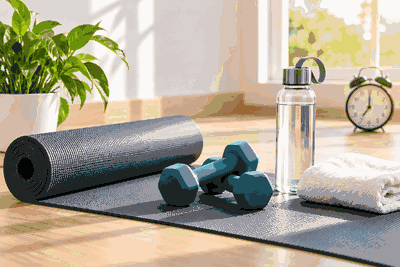
You do not need a dedicated home gym to exercise effectively. A small section of a bedroom, living room, or another uncluttered area may provide enough room for basic bodyweight movements. Ideally, choose a space with adequate ventilation, comfortable lighting, and a stable floor surface. Move furniture, loose cables, and slippery rugs away from your workout area before starting. If you plan to perform floor exercises, a suitable exercise mat can provide cushioning, although a clean, stable surface may be sufficient for many standing activities. The most important consideration is whether you can move safely without striking nearby objects or losing your balance.
Your exercise environment should also make workouts convenient. Keeping a mat, towel, or workout clothes in an accessible location reduces the effort required to begin each session. Some people enjoy following guided exercise videos, while others prefer quiet routines with a simple timer. If you share your home with family members, choose a time when interruptions are less likely. You can also select low-impact movements that create minimal noise, especially if you live in an apartment. Creating a comfortable workout space is less about decorating a fitness corner and more about removing small barriers that might otherwise discourage you from exercising.
Essential Equipment and No-Equipment Alternatives
One of the most appealing aspects of home fitness is that many effective exercises require no specialized equipment. Your body weight can provide resistance for movements such as squats, wall push-ups, glute bridges, and modified planks. These exercises train important muscle groups and can be adjusted to accommodate different fitness levels. For beginners, learning to perform movements with control is generally more valuable than immediately adding resistance. As your confidence and strength improve, you may choose to introduce inexpensive equipment, but it is entirely possible to establish a meaningful routine without purchasing anything.
Optional equipment includes a non-slip exercise mat, resistance bands, and appropriately weighted dumbbells. A sturdy chair may also be useful for supported exercises, provided it cannot slide or tip during use. Resistance bands offer a portable way to train different muscle groups, while dumbbells can help you progressively challenge your muscles once basic movements become comfortable. However, equipment should support your fitness goals rather than become a prerequisite for getting started. If your budget is limited, prioritize consistency, safe technique, and a balanced selection of exercises. Your first month of home training can focus entirely on simple bodyweight movements and walking.
Best Home Exercises for Complete Beginners
The most effective beginner home workout includes movements that train several major muscle groups while also improving cardiovascular fitness and mobility. You do not need dozens of complicated exercises to achieve this balance. A small collection of basic movements can help strengthen your legs, upper body, and core while gradually improving your endurance. The goal is to learn correct technique, choose manageable repetitions, and avoid pushing through pain. Quality matters more than quantity, particularly when your body is adapting to unfamiliar physical activity.
Start with exercises that feel comfortable and allow you to maintain control throughout the movement. If an exercise is too challenging, select an easier variation instead of forcing yourself to complete it. Rest between sets as needed, breathe normally, and avoid holding your breath during demanding movements. You should generally finish a beginner workout feeling that you have worked your muscles without becoming completely exhausted. As you become stronger, you can increase repetitions, add another set, or progress to a more challenging version. The following exercises provide a useful foundation for a simple full-body home workout.
Bodyweight Squats for Lower-Body Strength
Bodyweight squats are a practical exercise for strengthening the thighs, hips, and gluteal muscles. These muscle groups play important roles in everyday activities such as standing up from a chair, climbing stairs, and carrying groceries. To perform a basic squat, stand with your feet approximately shoulder-width apart and keep your weight balanced across your feet. Bend your hips and knees as though you are preparing to sit down, lowering only as far as you can comfortably control. Keep your torso stable, allow your knees to follow the direction of your toes, and return to standing by pressing through your feet. Move slowly rather than rushing through repetitions.
Beginners can start with eight to ten controlled repetitions and rest before attempting another set. If a regular squat feels difficult, try sitting down on a stable chair and standing back up without using momentum. This variation helps you practice the movement while limiting the depth of the squat. As your strength improves, you may gradually increase your repetitions or perform the movement with a slower lowering phase. Avoid forcing yourself into a deep squat if you experience discomfort or cannot maintain control. Consistent practice can improve lower-body strength and movement confidence without requiring weights or machines.
Wall Push-Ups and Modified Push-Ups
Push-ups strengthen several upper-body muscles, particularly the chest, shoulders, and triceps. Traditional floor push-ups can be challenging for beginners, but easier variations provide an accessible starting point. Wall push-ups are particularly useful because they allow you to adjust the difficulty by changing your distance from the wall. Stand facing a sturdy wall, place your hands slightly wider than shoulder-width apart, and step backward until your arms are comfortably extended. Bend your elbows to bring your chest toward the wall while keeping your body aligned, then push back to the starting position. Perform the movement slowly and avoid allowing your lower back to sag.
Begin with approximately eight to twelve repetitions, depending on your strength and comfort. When wall push-ups become easy, you can progress to incline push-ups using a stable countertop or another secure elevated surface. The lower the surface, the more challenging the exercise generally becomes. Modified floor push-ups performed with the knees supported may be another option, although they still require adequate shoulder and core control. Focus on maintaining a comfortable range of motion and steady breathing throughout each repetition. If you experience wrist, shoulder, or elbow pain, stop and choose an alternative that does not aggravate the problem.
Planks and Core Strengthening Exercises
Core exercises help train the muscles surrounding your abdomen, back, and pelvis. These muscles contribute to stability during many everyday movements and other exercises. A plank is a popular core-strengthening exercise because it challenges multiple muscles simultaneously without requiring equipment. To perform a modified plank, place your forearms on a mat with your elbows beneath your shoulders and keep your knees on the floor. Gently tighten your abdominal muscles while maintaining a straight line from your shoulders toward your knees. Hold the position for a manageable period, such as ten to twenty seconds, while breathing normally. Avoid arching your lower back or allowing your shoulders to collapse.
Core training does not need to involve long plank holds or hundreds of abdominal crunches. Beginners may also benefit from gentle movements such as bird dogs, dead bugs, and controlled pelvic tilts. These exercises can help develop coordination and stability while allowing you to work at a comfortable pace. For example, a bird dog involves extending one arm and the opposite leg from a hands-and-knees position while keeping your trunk steady. Start with a small range of motion and use support when necessary. The objective is to build controlled strength rather than chase impressive repetition counts. Stop or modify any movement that causes back pain or other concerning symptoms.
Walking, Marching, and Low-Impact Cardio
Cardiovascular exercise strengthens your heart and lungs and helps improve overall endurance. Fortunately, you do not need a treadmill or stationary bicycle to begin. Walking around your home, marching in place, stepping gently from side to side, and dancing to music are all accessible ways to increase movement. Beginners can start with five to ten minutes at a comfortable pace and gradually extend the duration as their fitness improves. If you have limited space, marching in place may be especially convenient. Swing your arms naturally, maintain an upright posture, and choose a rhythm that allows you to remain in control of your breathing.
A useful way to judge moderate aerobic intensity is the talk test. According to the Centers for Disease Control and Prevention, people exercising at moderate intensity can generally talk but cannot comfortably sing. This provides a practical alternative to relying entirely on a smartwatch or heart-rate monitor. You can learn more from the CDC's physical activity intensity guidance. If you are completely new to exercise, however, you do not need to reach moderate intensity during every session. Gentle walking and other light movements can help you build the confidence and endurance needed for longer workouts.
Building an Effective Home Workout Routine
A successful workout routine balances exercise, recovery, and consistency. Rather than choosing random activities every day, create a simple weekly structure that includes strength training, aerobic movement, and opportunities to rest. This approach makes it easier to train different muscle groups without repeatedly overworking the same areas. For beginners, two or three strength-focused sessions per week can provide a manageable starting point, with walking or other comfortable activities on additional days. The exact schedule should depend on your current fitness level, available time, and recovery needs. There is no requirement to exercise intensely every day to make progress.
Think of your routine as a flexible appointment with yourself. A twenty-minute session completed consistently is usually more useful than an ambitious hour-long workout that you abandon after several days. Begin each session with gentle movement, perform your main exercises at a comfortable intensity, and finish with a gradual cool-down. Allow your muscles time to recover between demanding strength sessions, especially when you are experiencing normal post-exercise soreness. If a workout feels too difficult, reduce the number of sets or select easier movements. As your body adapts, you can gradually increase your activity while preserving enough energy for work, family responsibilities, and other daily commitments.
A Simple 20-Minute Beginner Workout
A twenty-minute home workout provides a convenient introduction to structured exercise. The following routine combines gentle cardiovascular movement with basic strength training and core exercises. Begin with a three-minute warm-up consisting of comfortable marching, shoulder movements, and easy side steps. Next, spend approximately twelve minutes completing a circuit of squats, wall push-ups, glute bridges, modified planks, and marching in place. Use controlled movements, rest whenever necessary, and adjust the repetitions to your abilities. Finish with five minutes of slower walking and gentle mobility exercises. The objective is not to perform every movement as quickly as possible but to build familiarity with a balanced exercise session.
| Workout Stage | Exercise | Suggested Duration |
|---|---|---|
| Warm-up | Marching and gentle mobility | 3 minutes |
| Strength | Bodyweight or chair squats | 2 minutes |
| Strength | Wall push-ups | 2 minutes |
| Strength | Glute bridges | 2 minutes |
| Core | Modified planks with rests | 2 minutes |
| Cardio | Marching and side steps | 4 minutes |
| Cool-down | Slow walking and gentle stretching | 5 minutes |
The time allocations are flexible, and the routine can be shortened if you need more rest. For strength exercises, begin with one or two manageable sets rather than trying to fill every minute with continuous repetitions. You might perform eight squats, rest for thirty seconds, and repeat if you feel comfortable. During the plank portion, several short holds are often more appropriate than one long attempt. If twenty minutes feels overwhelming, start with ten minutes and increase the duration gradually. Over time, this simple workout can become the foundation for a more varied program that includes additional exercises and progressive resistance.
A Seven-Day Home Exercise Schedule
A weekly schedule helps you organize workouts and avoid the temptation to train intensely every day. The example below is designed for generally healthy beginners and includes a mixture of strength training, light cardiovascular activity, and recovery. It is not necessary to follow the days exactly as written. You can move sessions around to accommodate work, family commitments, or changes in energy levels. What matters most is maintaining a reasonable balance between activity and rest. If you have been inactive for a long time, begin with shorter sessions than those shown and build toward the suggested durations over several weeks.
| Day | Workout | Suggested Time |
|---|---|---|
| Monday | Beginner full-body strength workout | 15–20 minutes |
| Tuesday | Comfortable walking or low-impact cardio | 15–20 minutes |
| Wednesday | Gentle mobility and stretching | 10–15 minutes |
| Thursday | Beginner full-body strength workout | 15–20 minutes |
| Friday | Walking, marching, or easy dancing | 15–25 minutes |
| Saturday | Optional light activity or yoga | 10–20 minutes |
| Sunday | Rest or gentle movement | As comfortable |
This schedule provides a starting framework rather than a complete long-term fitness target. As your endurance improves, gradually increase your aerobic activity toward recommended weekly levels while maintaining at least two muscle-strengthening sessions. Walking and other daily activities can contribute to your overall movement, even when they are not part of a formal workout. Pay attention to how your body responds after each session and adjust the following day's activity if necessary. A schedule that leaves you constantly exhausted is unlikely to remain sustainable. The most effective routine should challenge you appropriately while allowing sufficient recovery and supporting your normal daily life.
How to Increase Workout Intensity Safely
Progressive overload is the process of gradually increasing the challenge placed on your muscles and cardiovascular system. At home, you can apply this principle without expensive equipment by adding repetitions, increasing exercise duration, reducing unnecessary assistance, or choosing slightly more difficult movement variations. For example, someone who begins with eight wall push-ups may eventually progress to twelve repetitions before trying incline push-ups. Similarly, a person who initially walks for ten minutes may gradually extend the session to fifteen or twenty minutes. These changes should happen at a pace that allows you to maintain good technique and recover comfortably between workouts.
A common mistake is increasing several training variables at the same time. Adding more sets, harder exercises, and longer sessions simultaneously can create unnecessary fatigue and increase the likelihood of overuse problems. Instead, change one element at a time and observe how your body responds. Mild muscle soreness may occur when beginning unfamiliar exercises, but sharp pain, persistent joint discomfort, or worsening symptoms should not be ignored. Consider keeping a simple training log that records your exercises, repetitions, and perceived difficulty. This information can help you recognize when an activity has become easier and when you may be ready for a modest increase in challenge.
Staying Consistent With Home Fitness
Consistency is often more difficult than completing the first workout. At the beginning of a fitness journey, motivation may feel strong because everything is new and exciting. After a few weeks, however, work demands, family responsibilities, fatigue, and changing schedules can make exercise less appealing. Building a sustainable routine requires more than enthusiasm. It helps to establish predictable workout times, choose enjoyable activities, and prepare alternatives for busy days. For example, if you cannot complete your planned twenty-minute session, a shorter walk or ten-minute movement break can help you maintain the habit without creating unnecessary pressure.
Another useful strategy is connecting exercise to an existing daily routine. You might perform a short workout after brushing your teeth in the morning or take a walk after finishing work. These familiar activities can serve as reminders and reduce the need to make a new decision every day. Keep your expectations realistic and remember that occasional missed sessions are normal. Instead of attempting to compensate with an excessively demanding workout, simply return to your usual schedule. Long-term fitness is built through repeated manageable actions, not through perfection. A routine that fits your life is more likely to survive changes in mood, weather, and daily responsibilities.
Common Beginner Mistakes to Avoid
One of the most common beginner mistakes is doing too much exercise too soon. Enthusiasm can encourage people to attempt challenging workouts before developing the strength, endurance, or coordination required to perform them safely. This may lead to excessive soreness, discouragement, or avoidable injuries. Another mistake is ignoring technique in pursuit of higher repetition counts. Performing fifteen poorly controlled squats is not necessarily more beneficial than completing eight with comfortable, consistent movement. Beginners should prioritize learning exercise patterns and gradually building capacity rather than copying advanced routines from social media. If a movement causes pain, modifying or replacing it is usually more sensible than forcing yourself to continue.
Skipping warm-ups, neglecting recovery, and relying exclusively on one type of exercise are additional problems. A balanced program should include both aerobic activity and muscle strengthening, while also allowing time for rest. It is equally important to avoid comparing your progress with someone who has been exercising for years. Different people begin with different abilities, responsibilities, and health circumstances. Your workout should reflect your needs rather than someone else's performance. Finally, remember that sweating heavily is not a reliable measure of workout quality. Temperature, clothing, and individual differences influence perspiration. Evaluate your progress through improved movement, strength, endurance, and consistency instead.
Nutrition, Hydration, and Recovery
Exercise is only one part of a healthy lifestyle. Balanced nutrition, adequate hydration, and sufficient sleep help support your body's ability to perform and recover from physical activity. You do not need an expensive supplement collection or a highly restrictive diet to begin exercising at home. Instead, focus on eating a variety of nutritious foods, including vegetables, fruits, whole grains, and appropriate sources of protein. Protein-containing foods such as eggs, fish, beans, lentils, dairy products, and lean meats can help support muscle maintenance and repair. Carbohydrate-rich foods also provide energy for physical activity. The appropriate amounts depend on your individual needs, activity level, and health circumstances.
Hydration is particularly important when exercising in warm or humid conditions. Drink fluids regularly throughout the day and adjust your intake based on thirst, sweating, and the duration of activity. Most short, light-to-moderate home workouts do not require specialized sports drinks. Recovery also includes allowing muscles time to adapt after challenging exercise sessions. Sleep supports overall health and physical recovery, while lighter activity can help you remain mobile between strength workouts. Avoid assuming that more exercise always produces better results. Rest is a necessary part of a sustainable fitness program, and persistent exhaustion may indicate that your routine needs adjustment.
Tracking Progress and Staying Motivated
Tracking progress can help you recognize improvements that are easy to overlook in everyday life. Instead of relying entirely on body weight, consider recording how long you exercise, how many controlled repetitions you complete, and how difficult each session feels. You might notice that walking for fifteen minutes becomes easier, that you can complete more wall push-ups, or that you recover more quickly after climbing stairs. These practical improvements are meaningful signs of developing fitness. A notebook, calendar, or simple phone application can provide enough information to monitor your progress. You do not need sophisticated technology to understand whether your routine is becoming more manageable.
Motivation also improves when exercise feels rewarding rather than punitive. Choose activities you enjoy, celebrate small achievements, and vary your routine occasionally to prevent boredom. Some people find guided workout videos helpful, while others prefer exercising with a family member or listening to music. Setting a realistic monthly goal can provide direction, but remember to evaluate your progress with patience. Physical changes and improvements in fitness happen at different rates, and short-term fluctuations do not necessarily indicate failure. The most valuable achievement is developing confidence in your ability to remain active. Over time, that confidence can make exercise feel like a normal part of daily life rather than an obligation.
Conclusion
Learning how to start exercising at home without going to the gym is simpler than many people imagine. You do not need expensive equipment, advanced athletic skills, or hours of free time to begin improving your fitness. Basic movements such as squats, wall push-ups, modified planks, and walking can provide a practical foundation for building strength and endurance. By setting realistic goals, creating a safe exercise space, and following a manageable weekly schedule, you can develop a routine that fits naturally into your lifestyle. The most important step is choosing an activity level you can sustain and gradually building from there.
Remember that fitness is a long-term process rather than a short challenge with a fixed finish line. Some weeks will be more productive than others, and occasional interruptions are a normal part of life. Focus on returning to your routine, improving your technique, and recognizing the small changes that make everyday activities easier. As your strength and confidence grow, you can introduce more challenging exercises or longer sessions when appropriate. Start with a few comfortable minutes today, give yourself time to adapt, and build a healthier lifestyle through regular movement. Your home can be an effective place to begin that journey.
Frequently Asked Questions (FAQs)
1. Can I get fit at home without going to the gym?
Yes, you can improve your fitness at home without joining a gym. Bodyweight exercises, walking, dancing, and other activities can help build strength, endurance, and cardiovascular fitness. Your results will depend on factors such as consistency, exercise intensity, recovery, and your starting fitness level. Beginners can make meaningful progress with simple movements that require little or no equipment. As you become stronger, you can increase repetitions, extend workout duration, or add resistance to continue challenging your body. A gym can provide additional equipment and support, but it is not essential for becoming more physically active.
2. How many minutes should a beginner exercise at home?
Many beginners find that ten to twenty minutes is a manageable starting point, although the appropriate duration depends on individual abilities and health circumstances. If you have been inactive for a long time, even five minutes of comfortable movement may be useful. Gradually increase your activity as your endurance and confidence improve. Adults can eventually work toward at least 150 minutes of moderate-intensity aerobic activity per week, along with muscle-strengthening exercises on two or more days. These are long-term health recommendations rather than minimum requirements for your first workout. Starting small and progressing consistently is generally more sustainable than immediately attempting demanding daily sessions.
3. What is the best home exercise for losing weight?
There is no single exercise that guarantees weight loss for everyone. Walking, marching, dancing, and bodyweight circuits can increase physical activity and contribute to overall energy expenditure. Strength training can also help maintain muscle while improving functional fitness. Weight management depends on multiple factors, including food intake, activity levels, sleep, medications, and individual health circumstances. A balanced approach that combines enjoyable movement with sustainable eating habits is usually more practical than relying on one intense exercise. Choose activities you can perform regularly and safely, and consider seeking personalized advice from a qualified healthcare professional if you have specific weight-management or medical concerns.
4. Do I need exercise equipment to start working out at home?
No, you do not need specialized exercise equipment to begin a home fitness routine. Many useful exercises rely on body weight, including squats, wall push-ups, glute bridges, and modified planks. Walking or marching in place can also provide aerobic activity without requiring a treadmill. A mat, resistance bands, or dumbbells may become useful later, but these are optional additions rather than essential purchases. Beginners should focus first on comfortable movement, proper technique, and consistency. Once you understand your fitness preferences and goals, you can decide whether investing in additional equipment would make your workouts more convenient or effective.
5. How long does it take to see results from home workouts?
The time required to notice exercise results varies considerably between individuals. Some people experience improvements in mood, confidence, or daily energy relatively early, while measurable changes in strength, endurance, or body composition may take several weeks or longer. Your starting fitness level, workout consistency, exercise selection, nutrition, sleep, and recovery all influence progress. Rather than expecting visible physical changes by a specific date, monitor practical improvements such as completing more repetitions or walking longer with less effort. Gradual progress is still valuable, even when it is not immediately noticeable. Building a sustainable exercise habit is often more important than reaching an arbitrary short-term milestone.
 Health -